
Long before Brenton See approaches a wall with a paintbrush, he begins by looking at what lives around it.
A reserve, wetland or patch of bushland within a ten to fifteen kilometre radius might hold the beginnings of the painting: a sacred kingfisher, a black cockatoo, a blue-banded bee or a flower so small that most passers-by would never notice it. Brenton takes those species and enlarges them until they command the wall. A bloom barely a centimetre across can become a metre wide. A lizard can stretch across the side of a building.
The result is unmistakably his: Western Australian flora and fauna rendered in bold colour, edged in black and finally lifted from the background by a fine white outline.
But the story of Brenton’s murals began decades before his first blank wall, inside a walk-through aviary on his grandmother’s farm near Busselton.
01
Among the birds
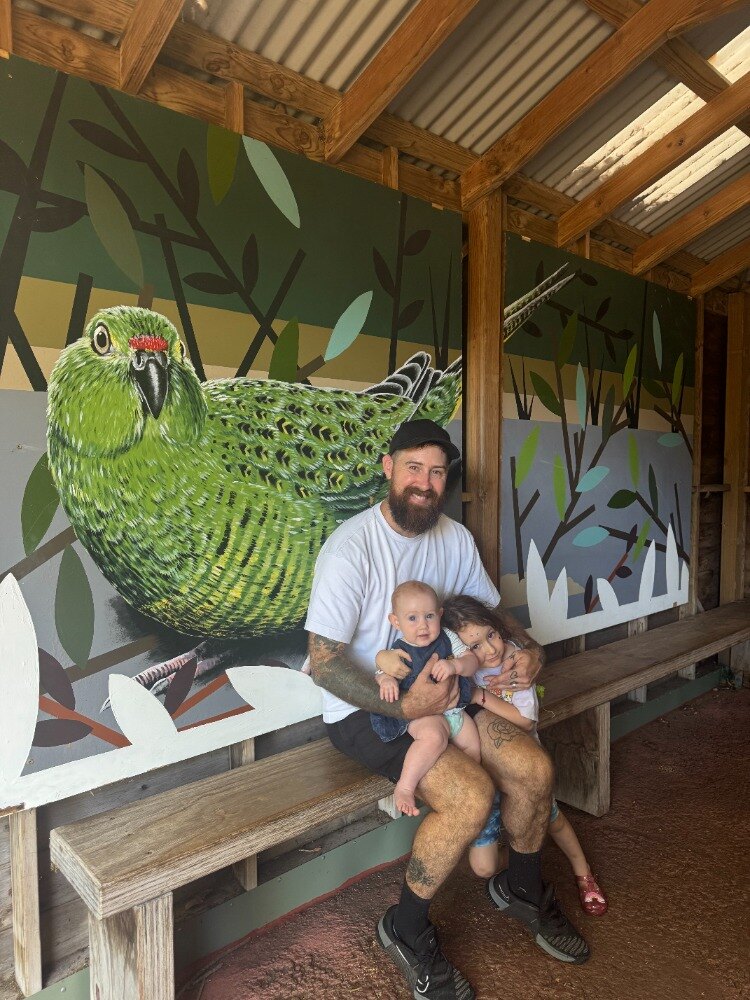
Brenton was about four years of age when he began spending time in the aviaries on his grandmother’s property. Around him were cows, sheep, green pastures, nutrient-rich red soils and the vast coastal landscapes of the South West, but it was the budgerigars (budgies) that held his attention.
He would sit quietly inside the enclosure while the birds carried on around him, feeding, drinking and tending to their young. The birds were accustomed to having people around and he reveled in the fact that he could watch them at close range without disturbing their routines.
“I loved just sitting in there,” he recalls. “They were able to go about their daily activities without me being a nuisance to them.”
Outside the aviaries, his grandmother scattered seed on the lawn, drawing in parrots whose colour and movement gave him another window into the natural world. Visits to family in Busselton also meant bush walks and time near the water. Nature became less a destination than the place where he felt most at ease.
Birds remained a constant as he grew. He copied illustrations from wildlife guides and later bred Gouldian finches in an aviary behind his own home. What began as childhood fascination would eventually supply both the subject matter and purpose of his career.
02
Finding his own line
The path to mural painting was anything but direct. Brenton studied graphic design at TAFE, where he learnt about colour, shape, composition and became proficient in Adobe Photoshop. Yet the parts he enjoyed most were those that took him away from the computer and allowed him to draw by hand.
He had imagined a future designing skateboard graphics or T-shirts or “something cool”. The prospect of producing business cards and flyers for agencies did not appeal to his creative nature, so he left the course and looked elsewhere for a form of art that felt more personal.
A visit to get his first tattoo opened another possibility. After showing the tattooist a portfolio of his drawings, Brenton was offered an apprenticeship. He spent eight months in the studio, much of it cleaning and speaking with customers, before learning drawing techniques suited to skin. Tattoo design taught him to sharpen contrast and place colour so an image would hold its presence.
At home, he kept returning to the delicate watercolours and pencil drawings in his bird guides. Gradually, the influences came together: the structure of graphic design, the forceful outlines of tattoo art and the careful observation of natural-history illustration.
“It was a combination of graphic design, the illustrations in the bird guides and the tattooing,” he says. “Everything that I did was helpful in creating the way that I paint.”
“Everything that I did was helpful in creating the way that I paint.”
The career paths themselves did not last, but each left a visible trace in the work that followed.
03
The first wall
After leaving tattooing, Brenton worked in retail while drawing and painting whenever he could. He began placing his work online. People responded and commented, then started buying his paintings. As sales grew, he reduced his retail work hours, moved into a Northbridge studio and began exhibiting.
He recalls that Instagram arrived at precisely the right moment. A completed painting could be photographed, posted and sold directly. His account became, in effect, his shopfront. Eventually he faced a choice between retail and art, and decided to take the risk.
Murals were not part of the plan. Brenton regarded the handful appearing around Perth as a passing fad and remained focused on studio work. Then, in 2015, a friend painting in Mount Lawley invited him to paint one of the neighbouring walls which she was contracted to produce a mural on as the project was a little too big to handle on her own.
The scale did not frighten him. He had already used grids to transfer drawings onto sizeable canvases, and enlarging the same grid onto a wall felt like a natural extension. The unfamiliar part was working in public.
In a studio, viewers encounter the finished picture. On the street, they see every uncertain stage. People could stand behind him, discuss the half-completed work and judge it before the image had come together.
The experience nevertheless altered the course of his career. “I never thought murals were going to be a career for me,” he says. That first wall proved otherwise.
04
What belongs here
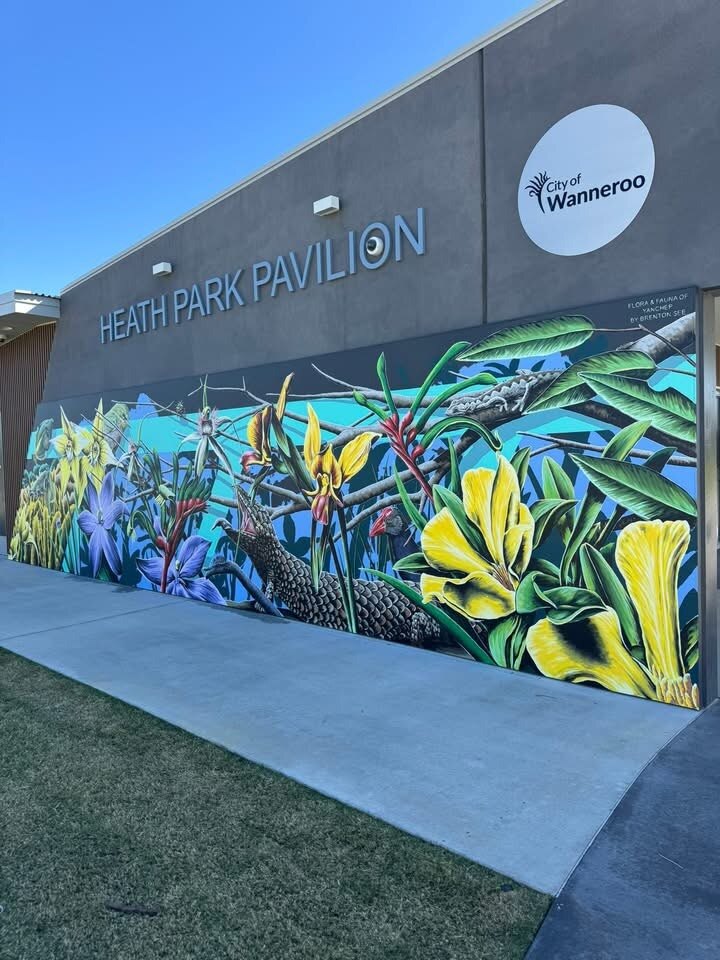
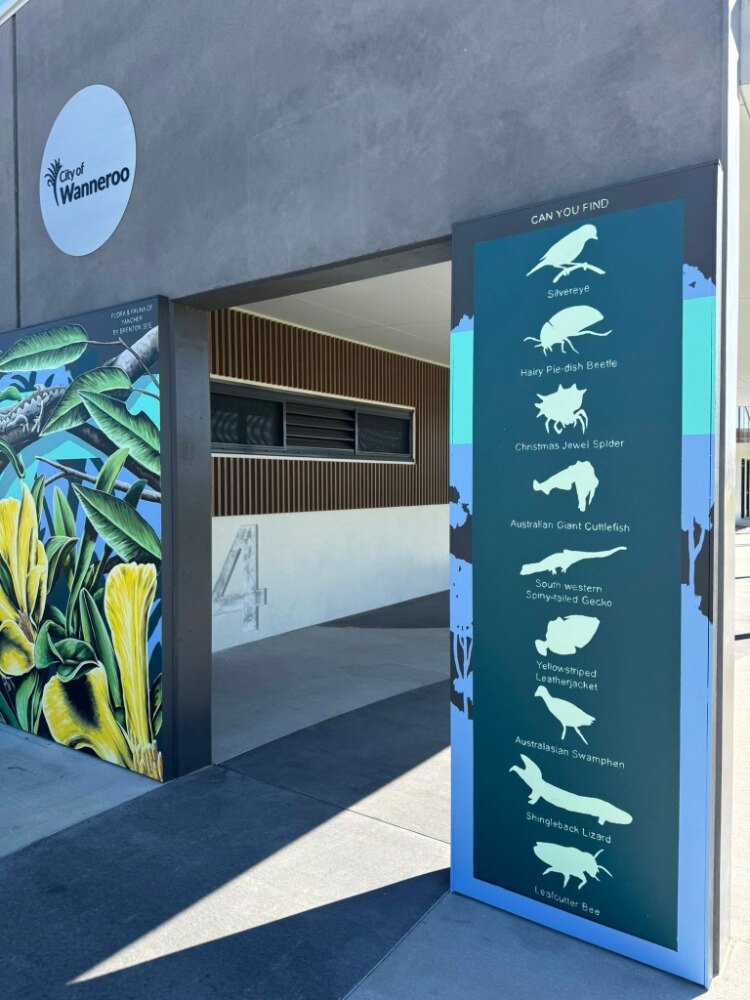
Today, place determines what Brenton paints. Before designing a mural, he investigates the native species recorded within roughly ten to fifteen kilometres of the wall. The boundary is self-imposed, but it gives every work a relationship with its surroundings.
He once spent more time walking through nearby reserves and taking his own reference photographs. With two young children and less time for fieldwork, he now mainly uses iNaturalist, an online database where dated observations and photographs help him confirm that a species has recently been seen in the area.
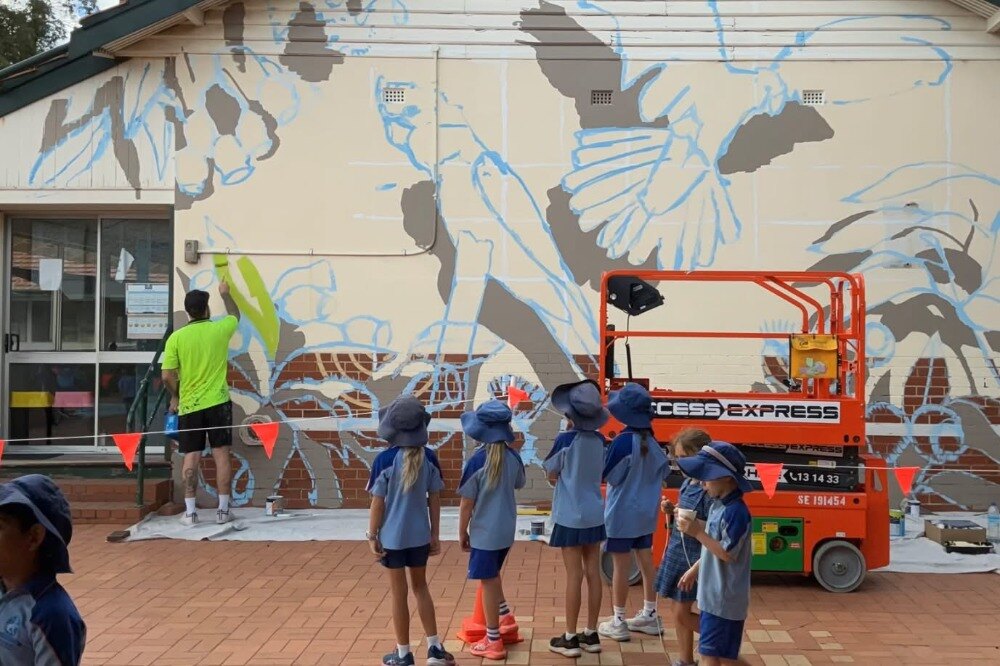
For school projects, this research can become part of the lesson where teachers involve students in the subject matter selection process of a new mural. Brenton shows students how to explore the database, then helps them identify animals and plants from nearby bushland. If a mural can accommodate five examples of flora and five of fauna, students may vote on which ones should appear on the finished artwork.
“If they’re putting a name behind something they’ve seen in their garden or at the park down the road, that’s a win for me,” he says.
“If they’re putting a name behind something they’ve seen in their garden or at the park down the road, that’s a win for me.”
The rule also means saying no in numerous circumstances. Rainbow lorikeets and laughing kookaburras may be familiar Perth sights, but both were introduced from eastern Australia. Brenton declines to paint them as representatives of local wildlife, sometimes suggesting a native alternative such as the more colourful sacred kingfisher, a relative of the kookaburra.
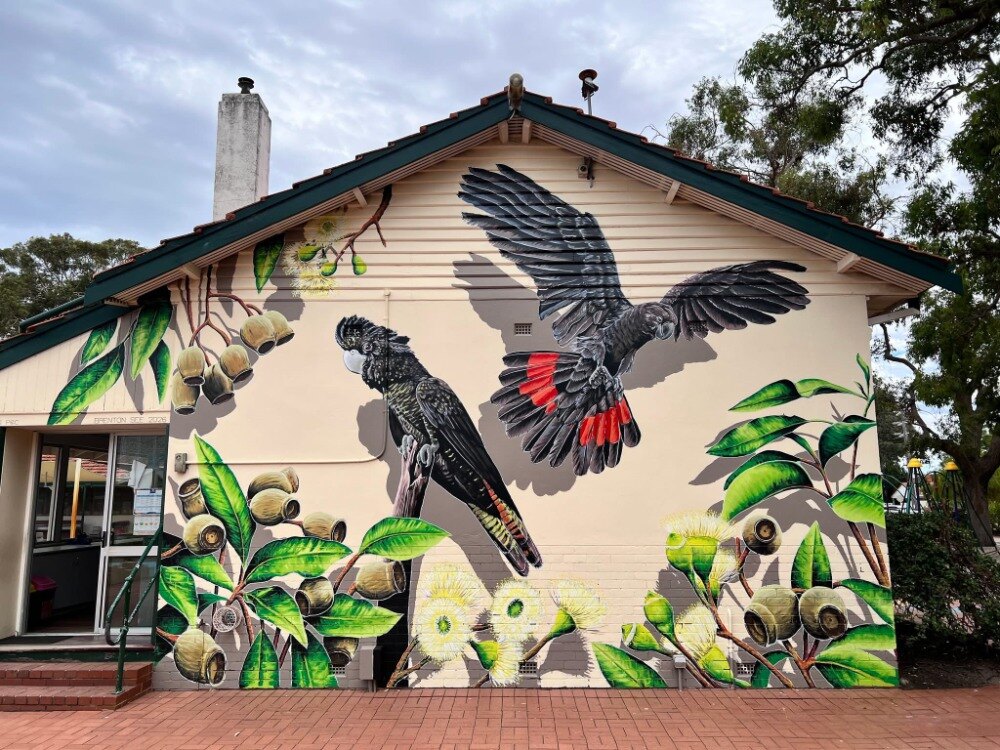
Birds remain popular with clients, but he looks for opportunities to include the creatures people often overlook: lizards, insects, frogs and tiny flowers hidden in the bush. His murals become outsized field guides, revealing what has been living nearby all along.
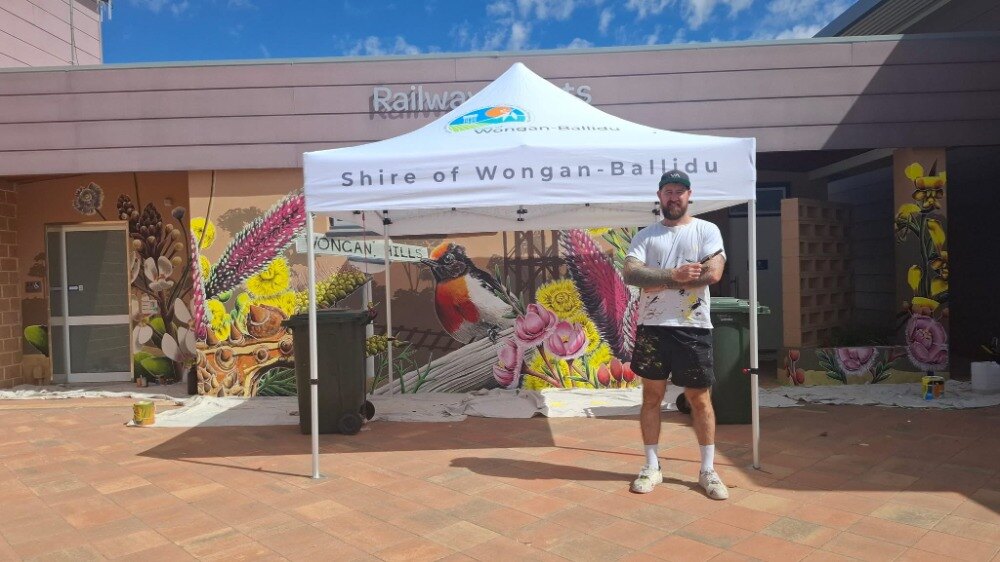
05
Building in layers
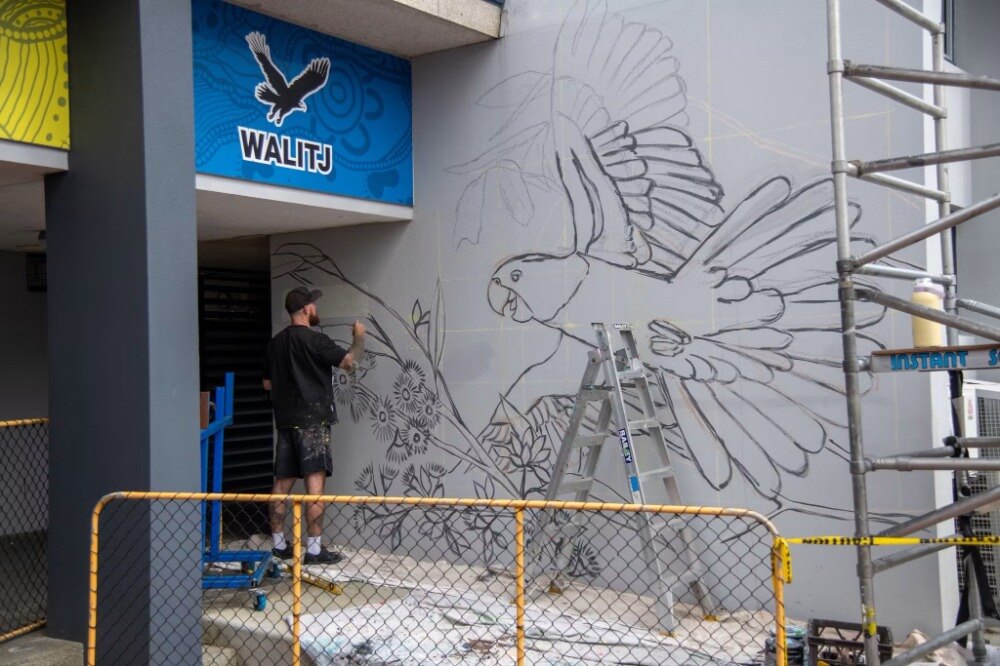
A mural begins with practical work. Brenton secures the site, lays drop sheets, checks the ground beneath his ladder to ensure it is level, brushes away cobwebs and removes anything flaking from the surface. A coat of primer seals the wall and gives the paint something to hold onto.
His concept sits on his phone. Flora is forgiving enough to sketch freehand in chalk, but animals demand greater precision. For them, he overlays a grid on the reference photograph, measures the wall and scales each square up. The mathematics turns a small image into a bird or animal several metres high.
Then the picture advances in stages. On the first day he establishes the outlines and perhaps the background colour. The next layers block in the subjects and build their form. Later come perspective, light and shadow. Brenton repeatedly walks away from the wall to see whether the composition still makes sense from a distance.
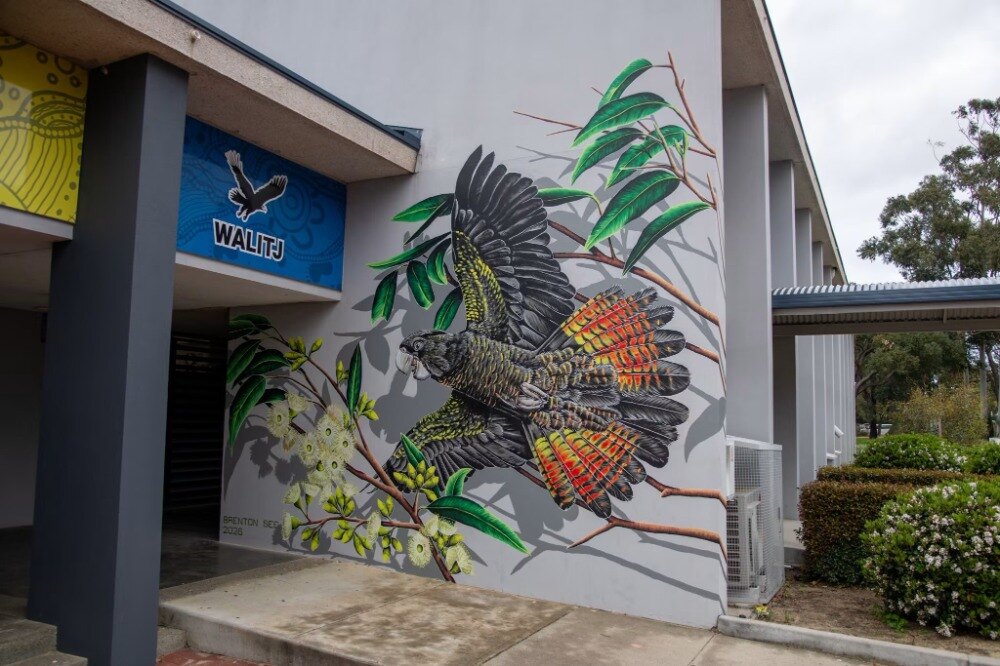
Black creates the deepest shadows. White comes last: highlights and an outline that separates each form from the background.
“Once that’s done, I know the mural’s finished,” he says.
The final image can look effortless, but reaching that white line usually takes about five to 6 days of methodical work.
06
Heat, dust and second thoughts
Painting walls is physically demanding work. Brenton may hold a long roller pole above his head for four or five hours. At six foot three, he can also spend much of a residential job crouched or perched on a milk crate to reach the lower part of a fence.
Perth’s cloudless summer skies bring another strain. Brenton has suffered heatstroke on several occasions as painted surfaces reflect heat and glare towards him. Absorbed in his work, he can easily forget to eat, drink or reapply sunscreen. He now trains regularly at the gym and takes greater care of his body, knowing that an injured back or shoulder could mean time away from the wall.
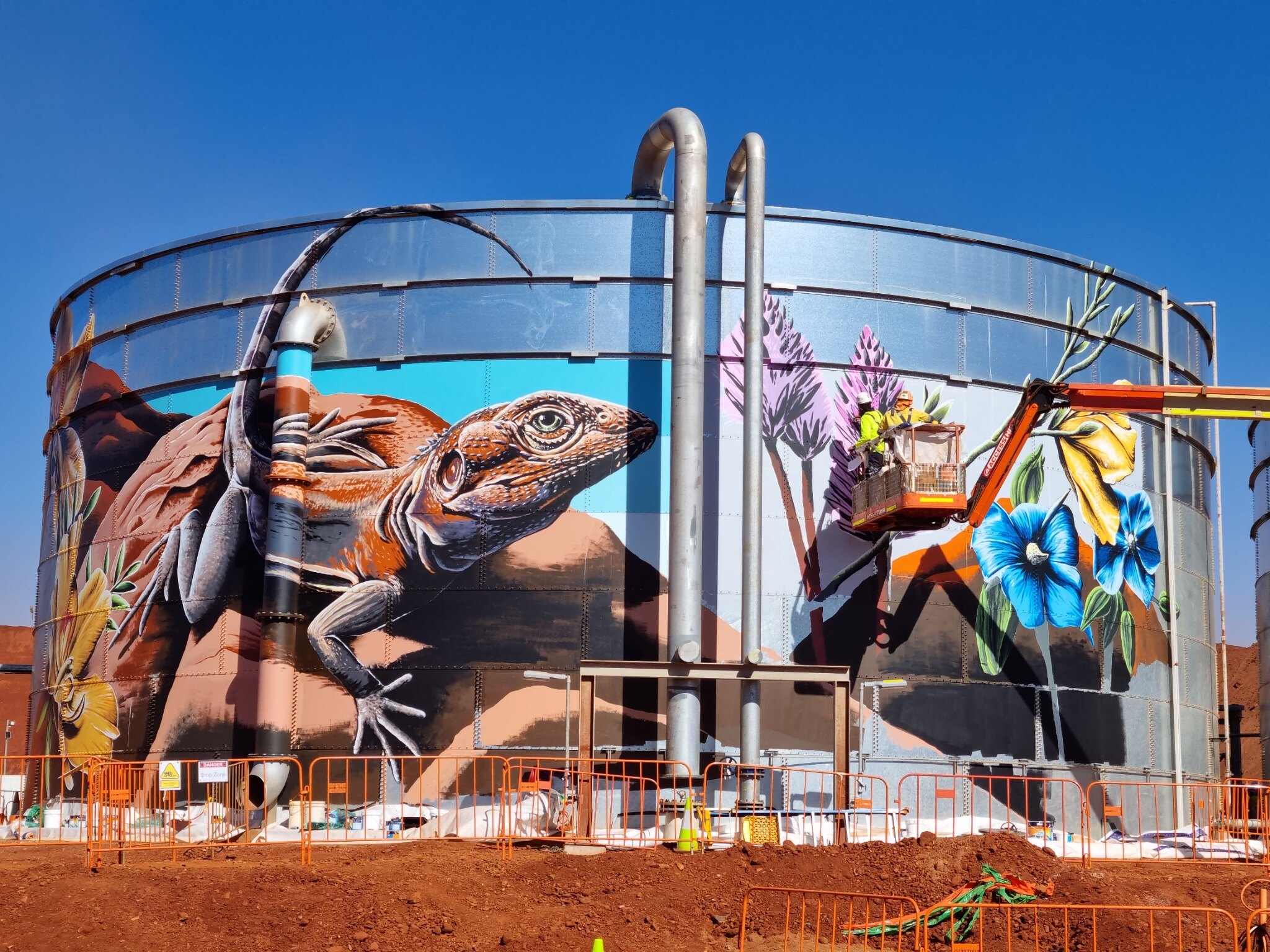
Few projects tested him like a large mural on water tanks at a mine site near Tom Price. His days began around four in the morning. Wind drove red dust into wet paint, forcing him to retouch the bright colours. Sun and shadow produced different drying times across the same galvanised-steel surfaces. Safety meetings interrupted the rhythm of painting. He learnt to work on several areas at once and adjust continuously.
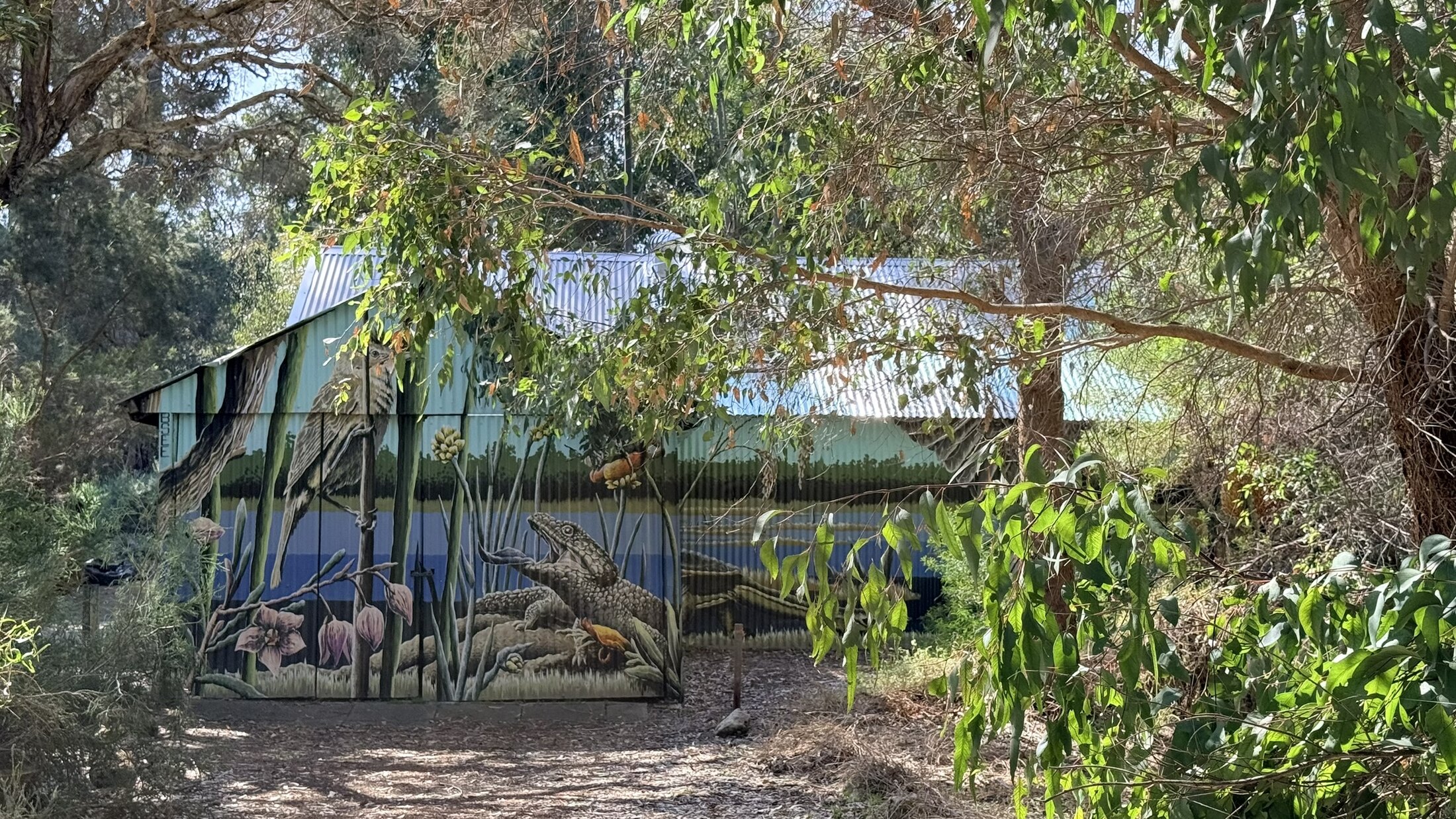
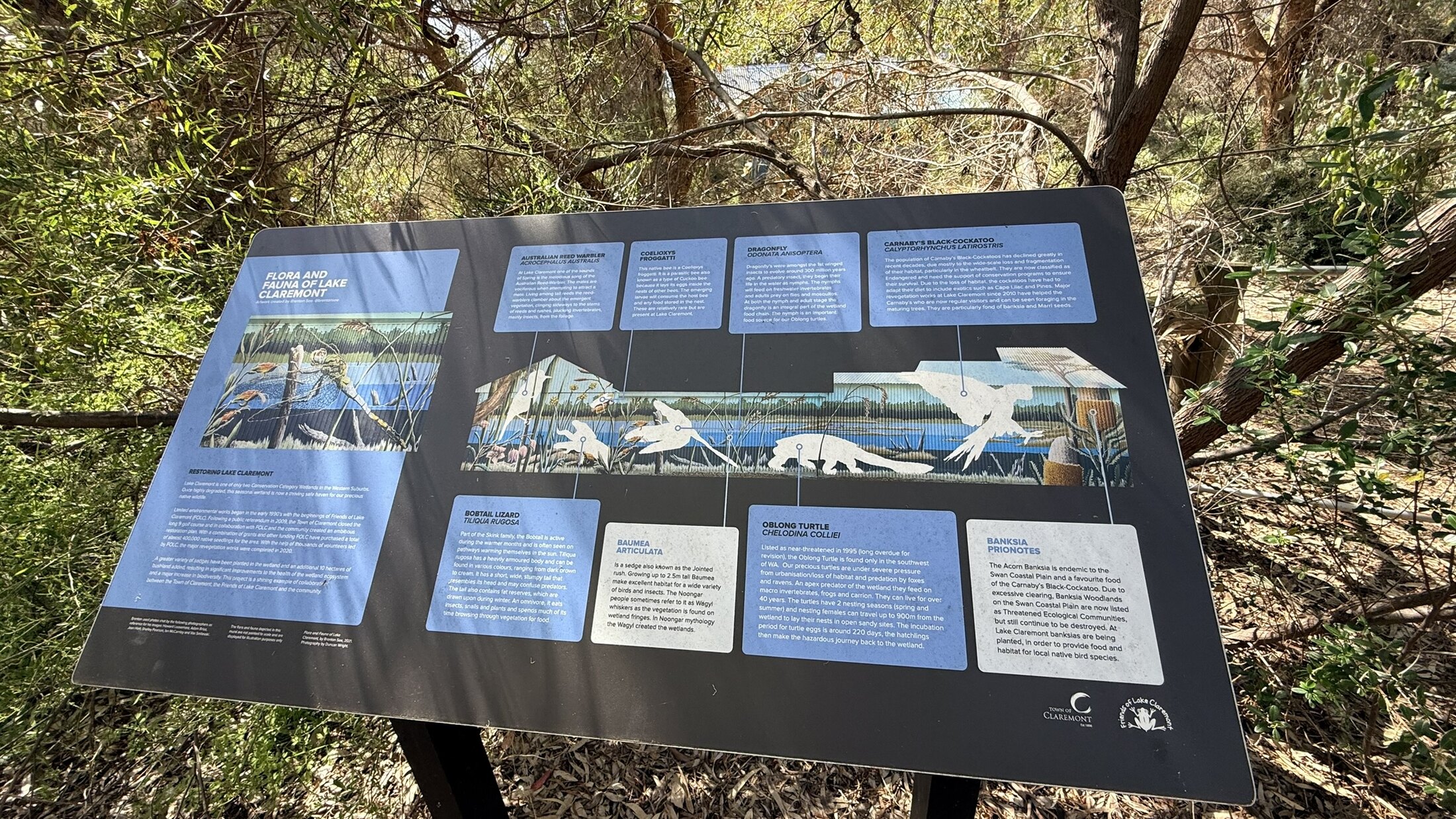
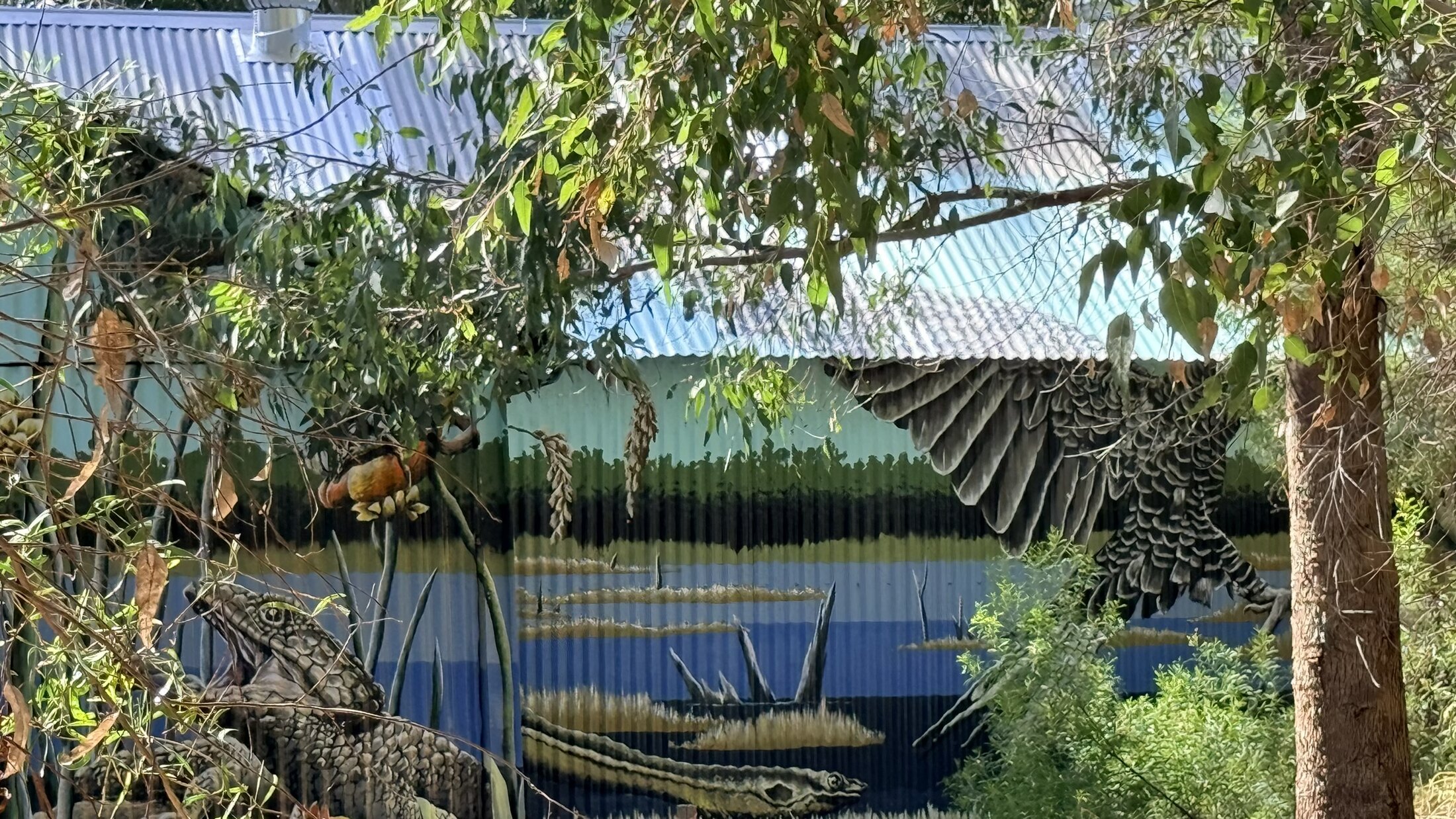
Other lessons have involved more than weather. At Lake Claremont, a tawny frogmouth requested for a mural was later found to carry negative cultural associations for members of the Noongar community, who were frequently invited to the area for events and ceremonies. Brenton removed it and redesigned that portion of the work around another bird and type of tree.
The experience reinforced the need for broader consultation before a design is approved. “More questions have to be asked,” he says. “You learn something from every job.”
“More questions have to be asked. You learn something from every job.”
Even without such complications, he refuses to leave a wall merely acceptable. If a drop shadow looks too dark when he steps back, he will spend hours repainting it. “I want to make sure it’s spot on.”
07
Keeping the wild in view
About four-fifths of Brenton’s murals are painted for private homes. The rest appear at schools, apartment buildings, businesses and public sites. Some projects allow him complete freedom; others begin with a school emblem, a client’s favourite bird or a species the community wants to protect.
Family life has also changed the way he works. With two young children, he now limits himself to one mural outside Perth each year. To serve distant clients without spending weeks away, he paints some works across joined marine-plywood panels in his Fremantle studio. The panels are then unscrewed, stacked in a van and transported to their destination, where the client installs them, allowing Brenton to complete the entire mural without leaving his studio.
His current interests still return to visibility. Black cockatoos are requested so frequently that their presence can disguise the seriousness of their decline. Because people see them feeding in Perth suburbs, Brenton believes they may forget that habitat loss and shrinking food sources are driving them into the city.
When people tell him they would rather see the birds alive than painted on a wall, his answer is simple: “So would I.” But he believes that removing murals, books and other depictions would only leave the species less visible. A name learnt from a painting can lead to a conversation, a school project or the decision to find out more.
Among the subjects Brenton hopes to paint are the numbat—Western Australia’s animal emblem—which survives in one of the largest remaining wild populations in Dryandra Woodland National Park, southeast of Perth, and the Gouldian finch of the Kimberley. Painting the latter would reconnect him with a bird he once bred in captivity but now sees differently: a brilliantly coloured native species whose declining numbers in the wild deserve greater attention.
That is the thread running from the child sitting quietly in his grandmother’s aviary to the artist standing before a wall today. He is still watching closely. Still finding colour in the creatures around him. And, with one final white outline, asking the rest of us to see them too.