
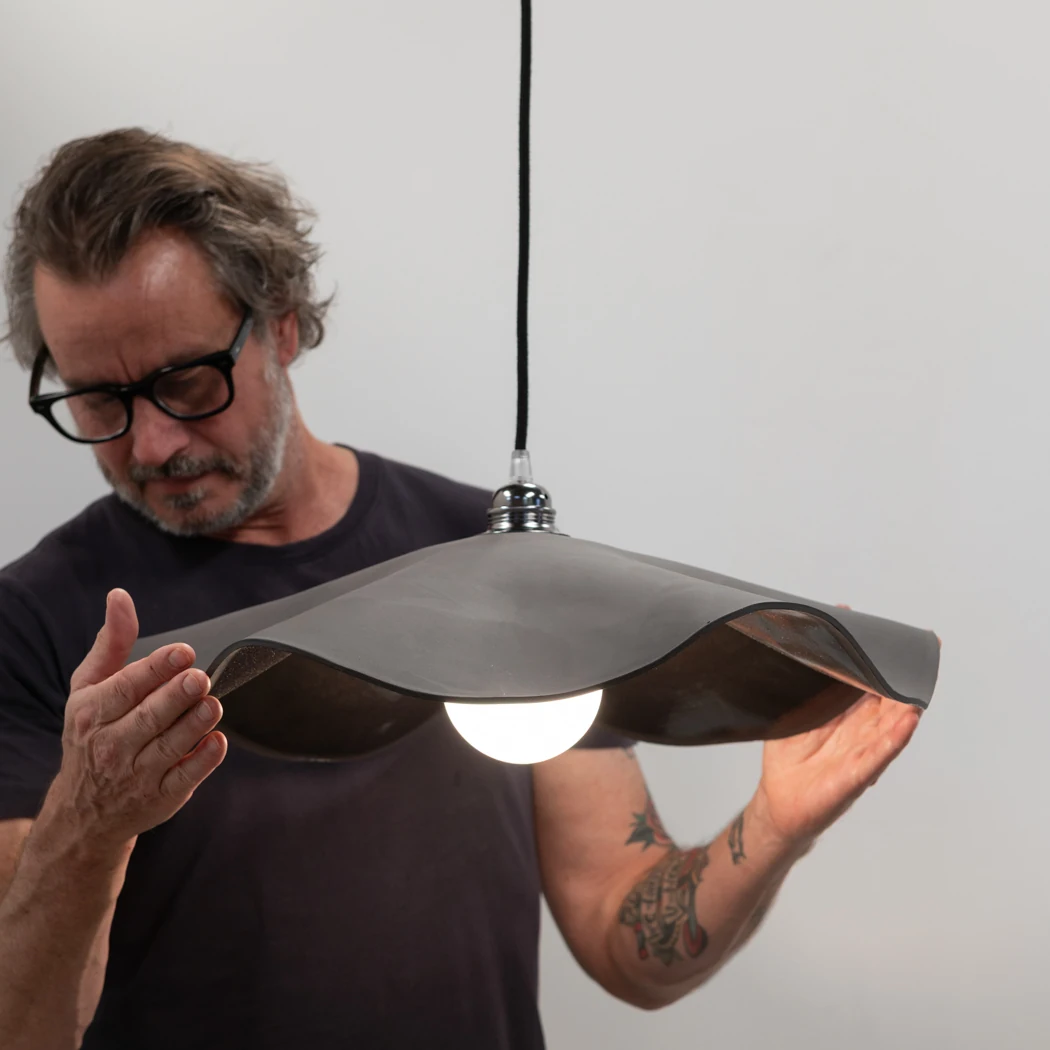
Some of Gavin Carver’s ceramic pendants end up in his mother’s garden.
They are the pieces that have not quite passed his meticulous inspection. A problem with the glaze, a small chip or a form that does not sit as it should can be enough to keep one of his light housings from leaving his hands for someone else’s home.
For an artist whose journey began with an affection for a wonky mug, this might seem surprising. But Gavin makes a distinction between the irregularities that give something character and the faults a customer should not have to accept.
“I never lean on the handmade aspect as an excuse for delivering anything substandard.”
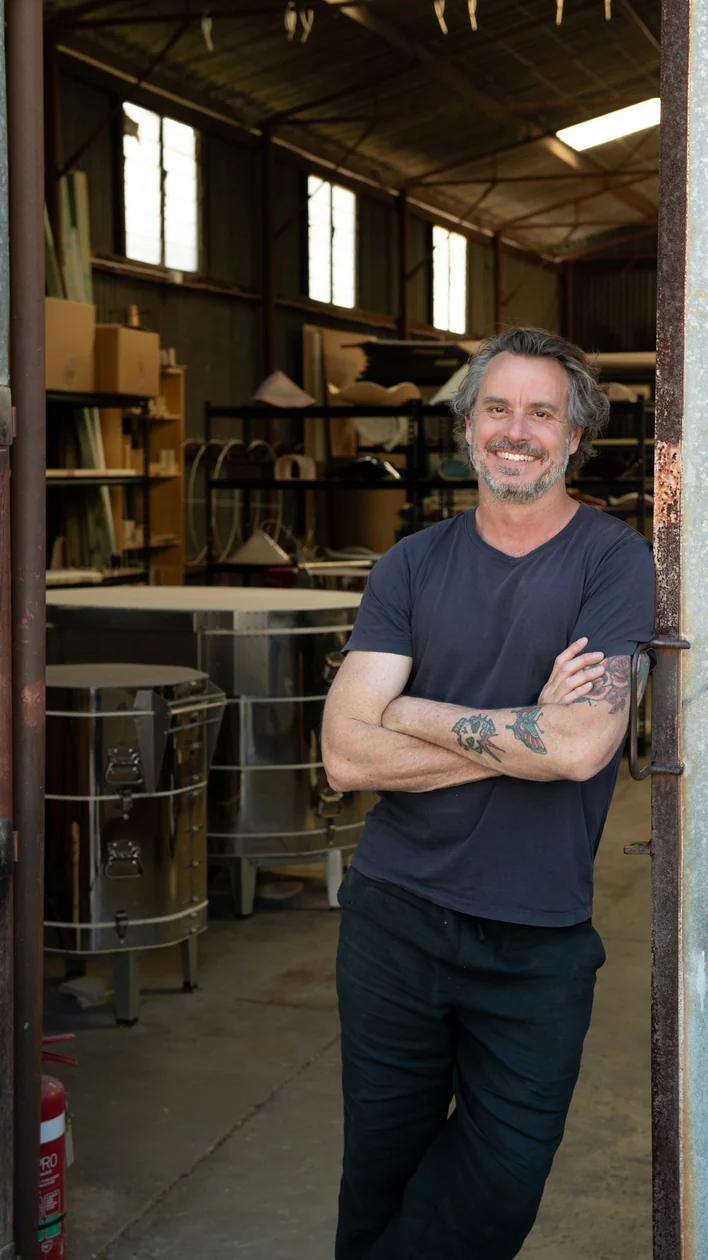
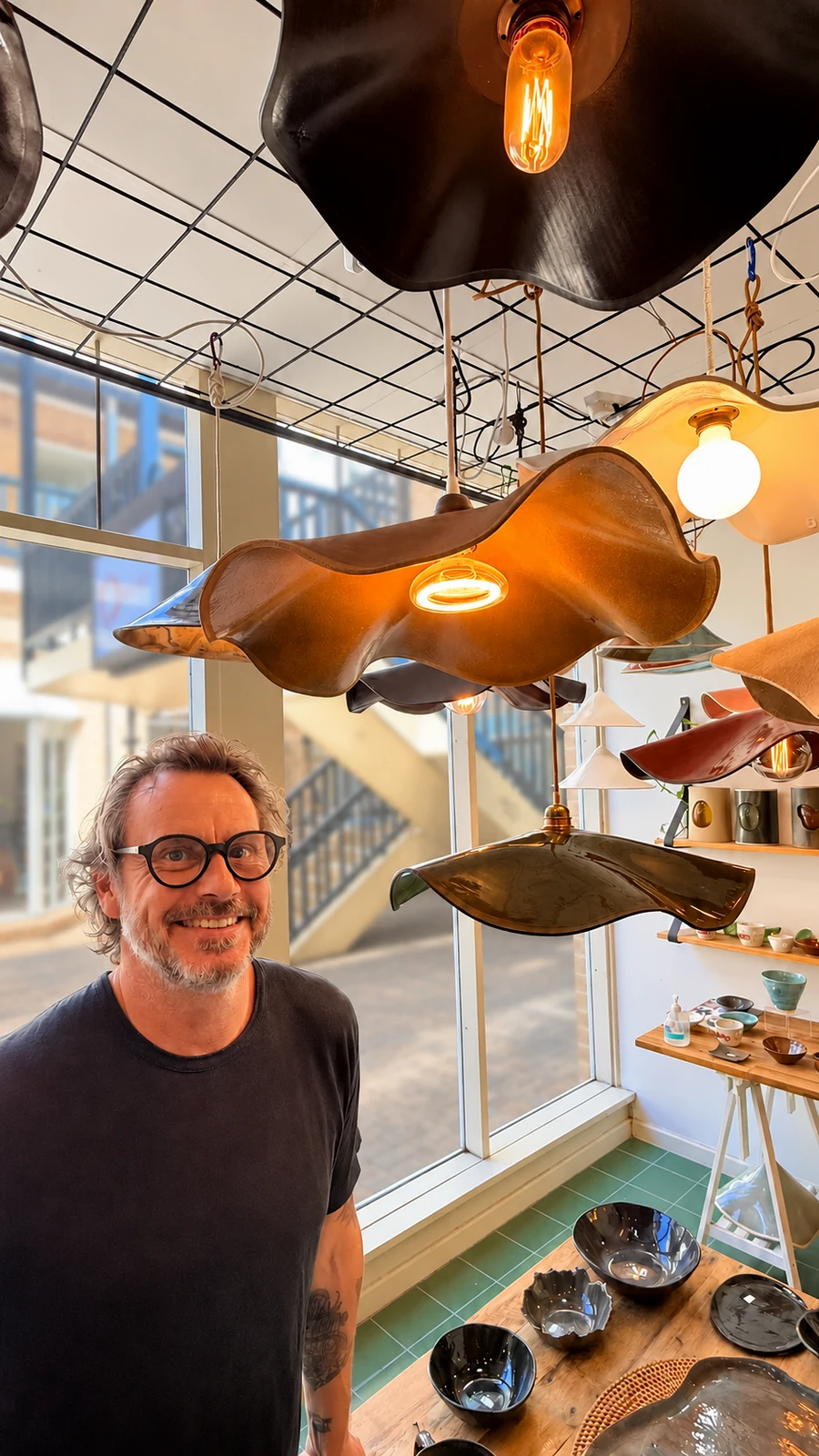
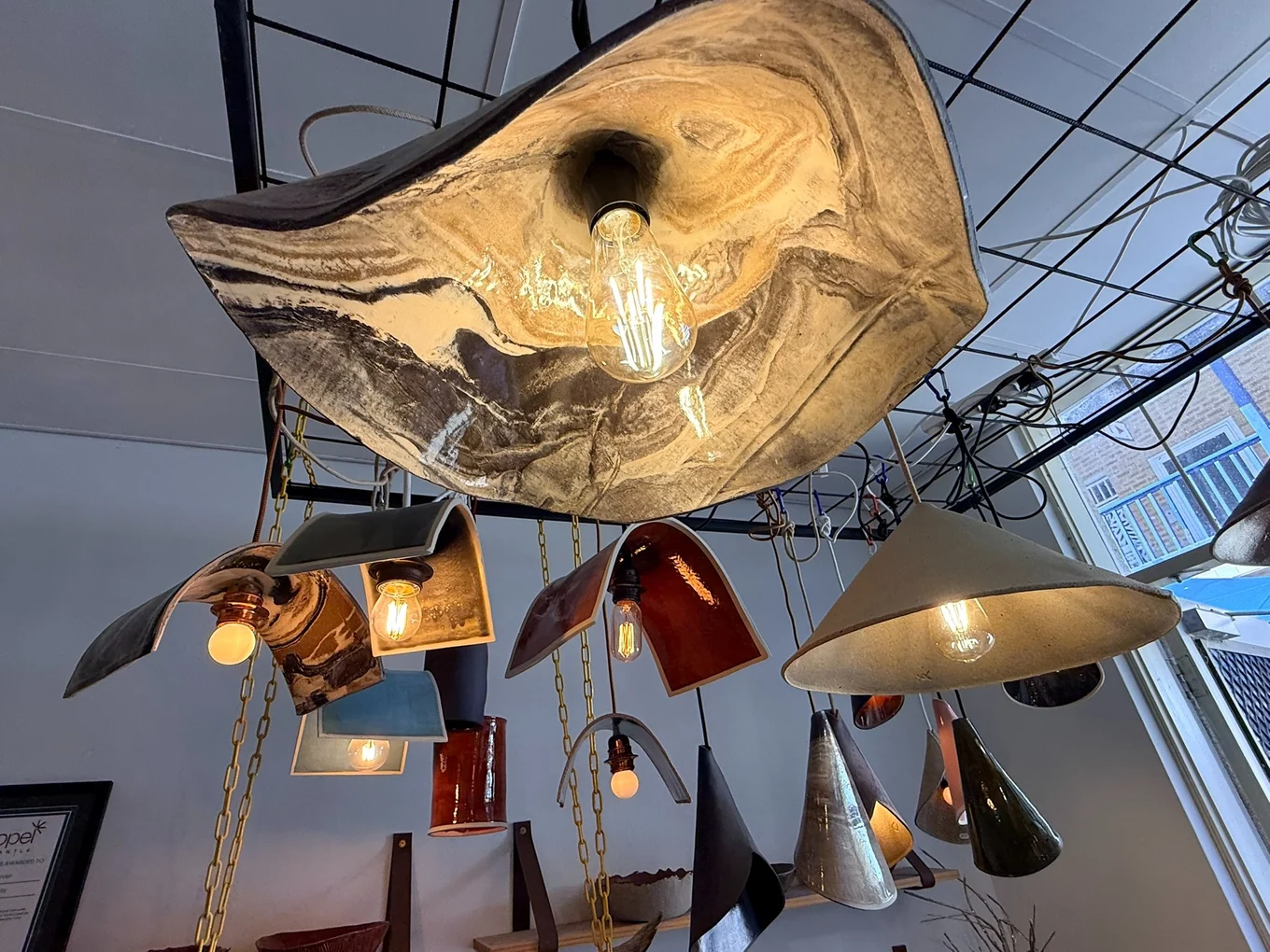
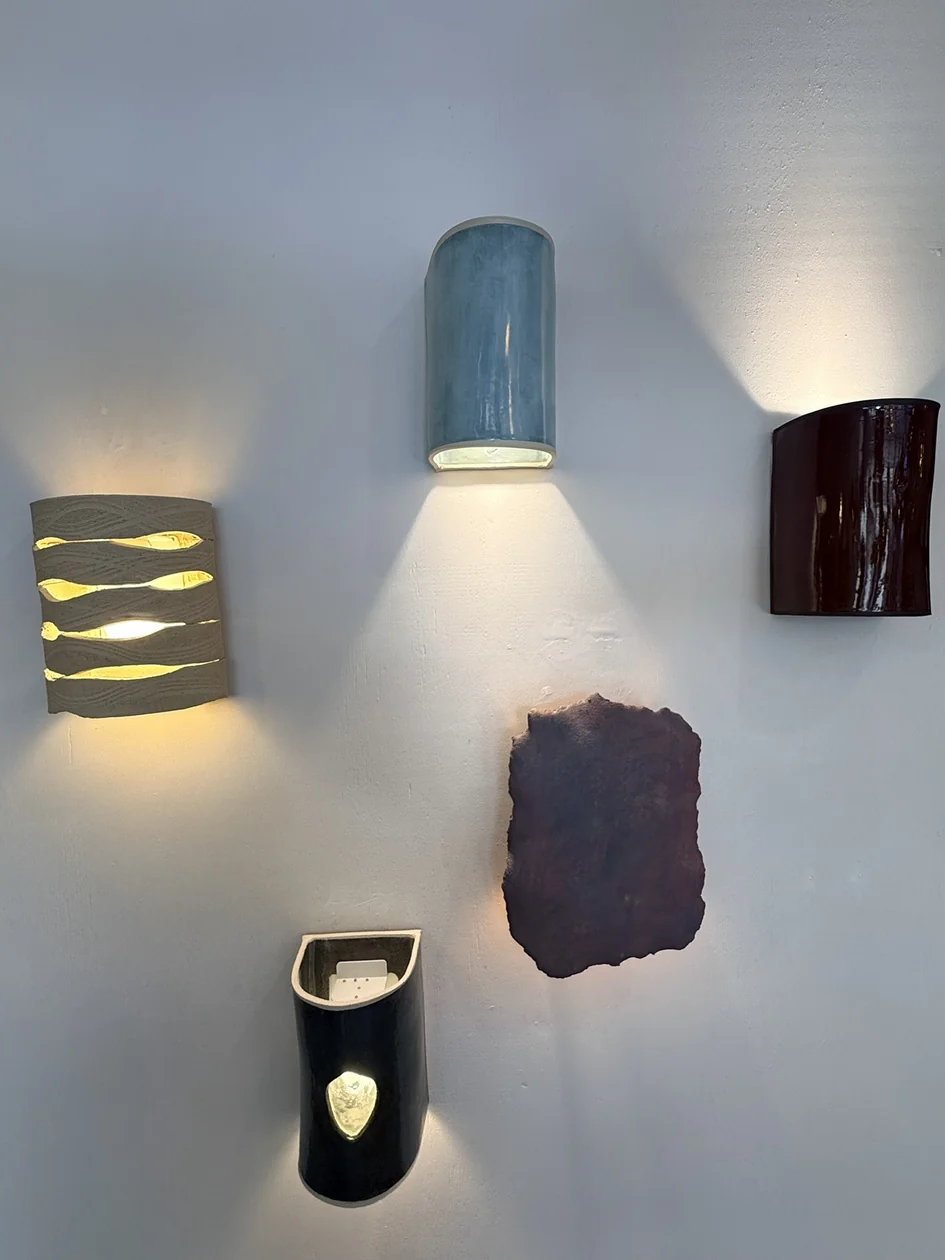
In his Fremantle studio, that balance is a continuing pursuit. His lights curve, fold and soften into sculptural forms, each shaped individually rather than pressed into a mould. Some combine ceramic and glass, allowing illumination to emerge through and around materials that behave very differently.
Their finished appearance gives little indication of the time spent getting them right, but the garden holds most of the evidence.
01
A wonky beginning
Before there was clay, there was advertising.
Gavin spent much of his career in the industry, eventually working in Facebook’s creative team. The work was creative, but he had begun wanting something else.
While working in Hong Kong, he reached a point of burnout. He no longer felt invested in what he was doing and resigned, giving himself time to work out what might come next.
He knew he wanted to make something. What that something would be was less clear.
A pottery class provided an unexpected answer.
There, he noticed a small, hand-pinched mug. It was wonky, humble and full of the character that comes from being made by a person. Something about it held his attention.
“I was immediately drawn to it,” he recalls.
That attraction gave birth to a business called Wonky Mugs in July 2020. Gavin began producing homewares whose differences were part of their appeal: objects with warmth and personality, each carrying its own shape.
He still makes some mugs for the shop. But building a sustainable business around them proved difficult, and another possibility began to emerge.
© Claire McFerran / Gathering Light
© Shamus Seow
02
Finding the light
The move into lighting began with a conversation at a market.
A lighting business approached Gavin about making ceramic lights. He had already been considering the idea; the enquiry gave him an opportunity to explore it.
As lighting became the focus, the business eventually outgrew the name Wonky Mugs and became Carver Lights.
Homewares had taught him about making objects people could hold and use. Lighting introduced another dimension: what an object could do to the space around it.
A pendant could become a sculptural centrepiece. A wall light could frame illumination, soften its effect or allow it to escape through an unexpected opening.
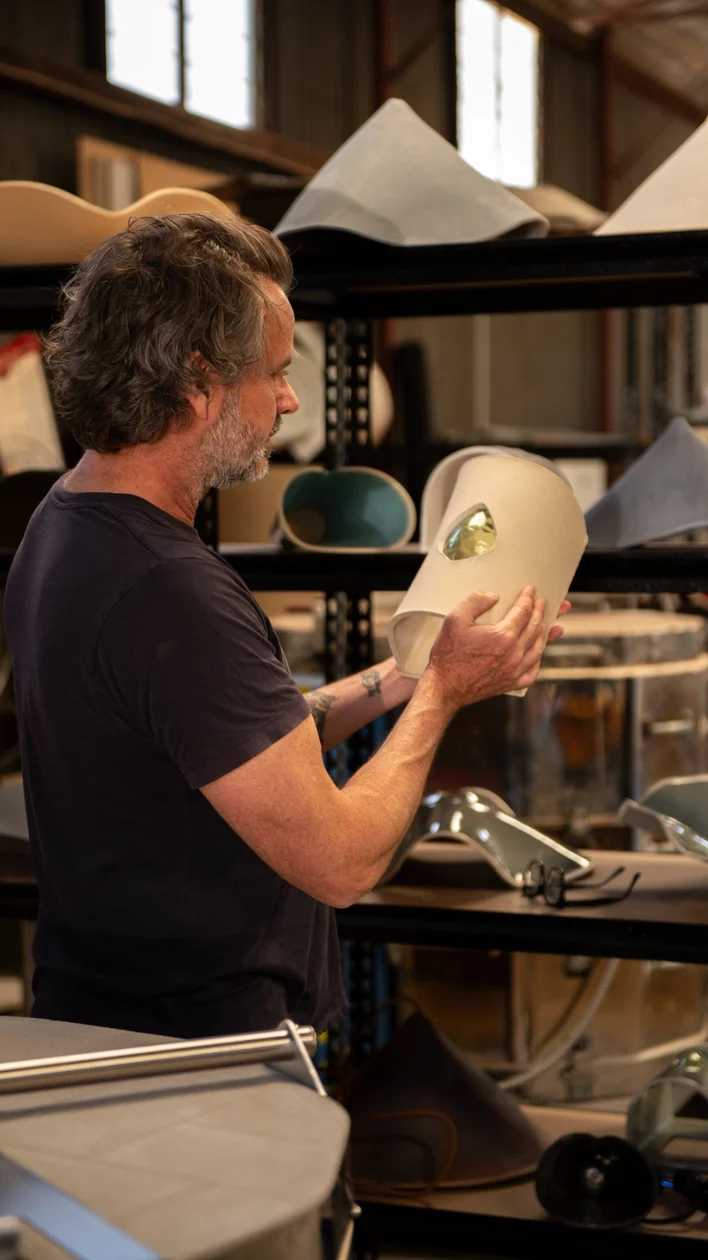
Gavin began experimenting with ceramic and glass, bringing together the solidity of one and the passage of light through the other.
The purpose was practical, but the ambition went further. He wanted his pieces to make people feel something when they entered a room.
That intention connected the lights to the little mug that had first caught his eye. The scale and function had changed, but the interest in individual character remained.
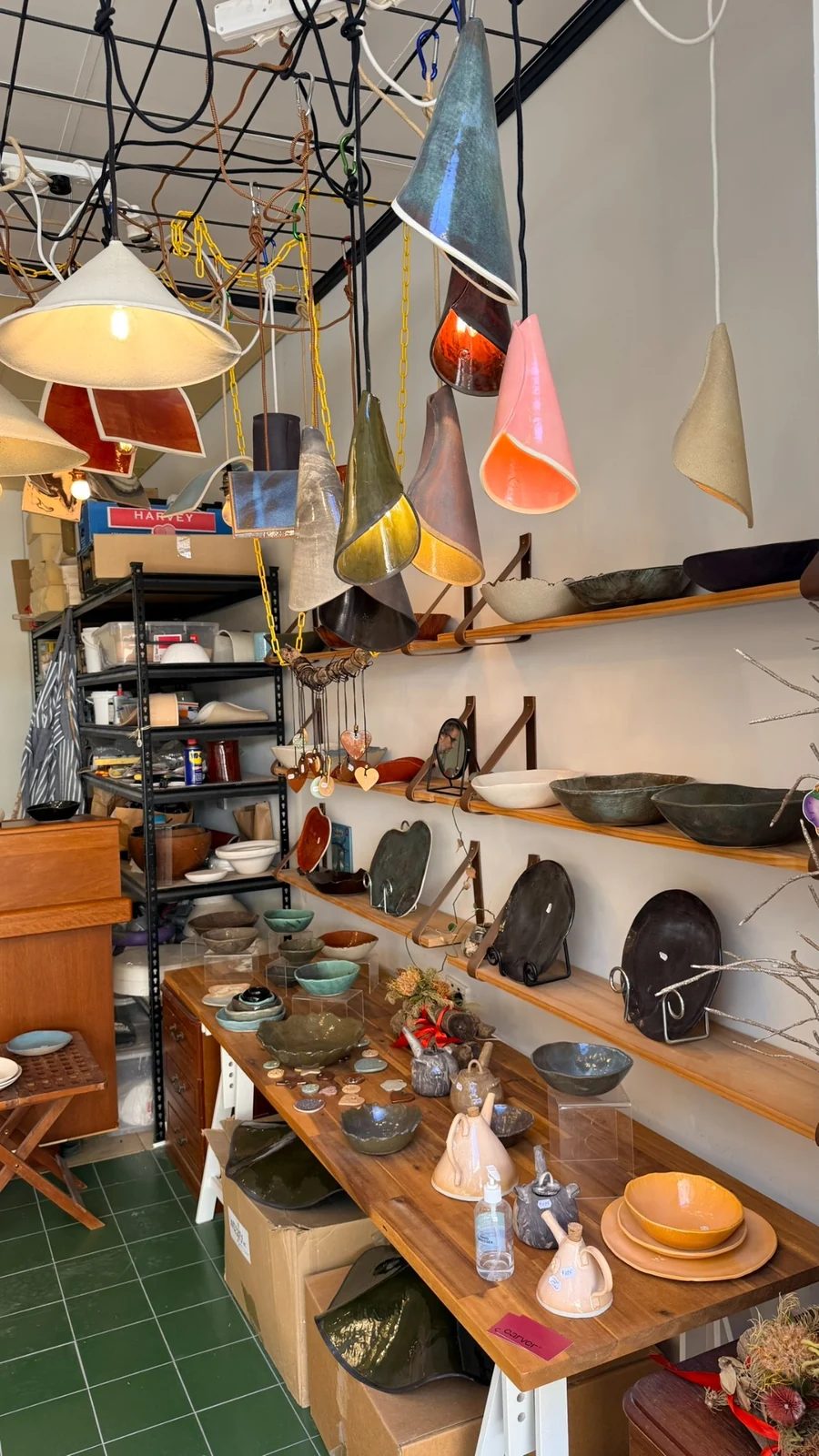
Every light is formed by hand. There are no moulds producing identical curves, and even pieces made to the same design emerge with differences.
“You won’t find the same curves on any of these lights,” he says.
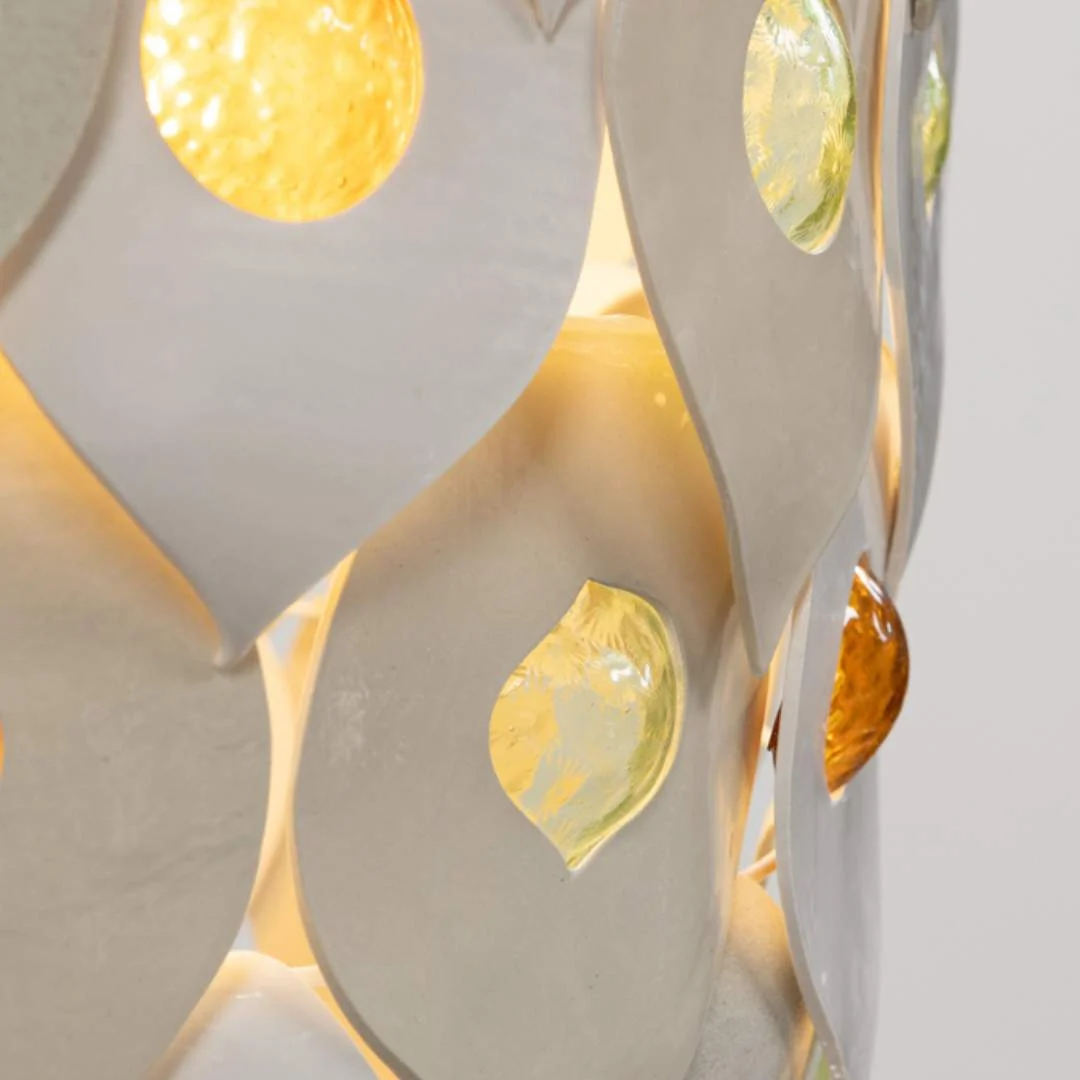
Image supplied by Gavin Carver
© Claire McFerran / Gathering Light
03
What happens in the kiln
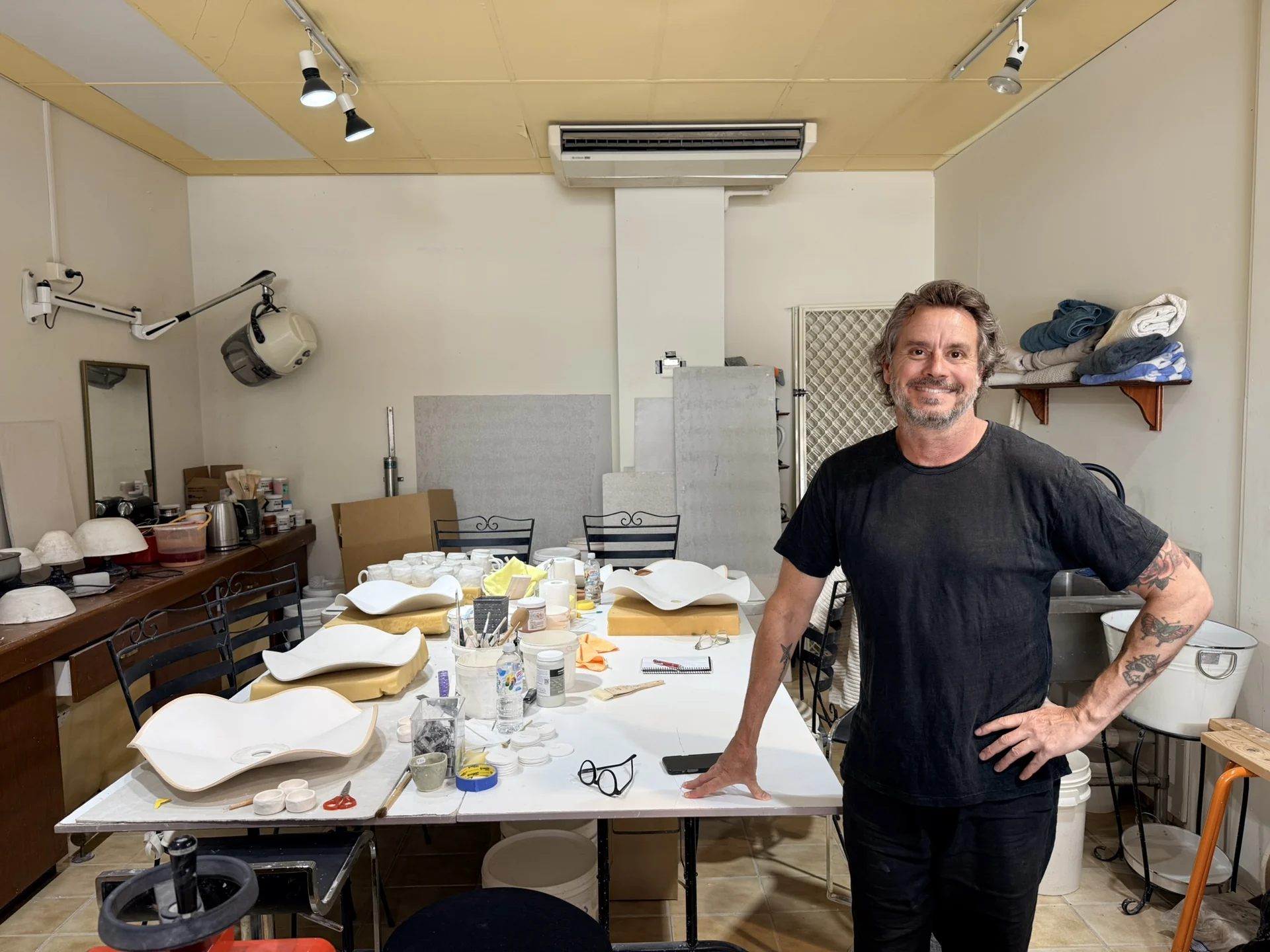
On the day of our visit to his Fremantle studio, Gavin is preparing to glaze a batch of his best-selling Marilyn pendants.
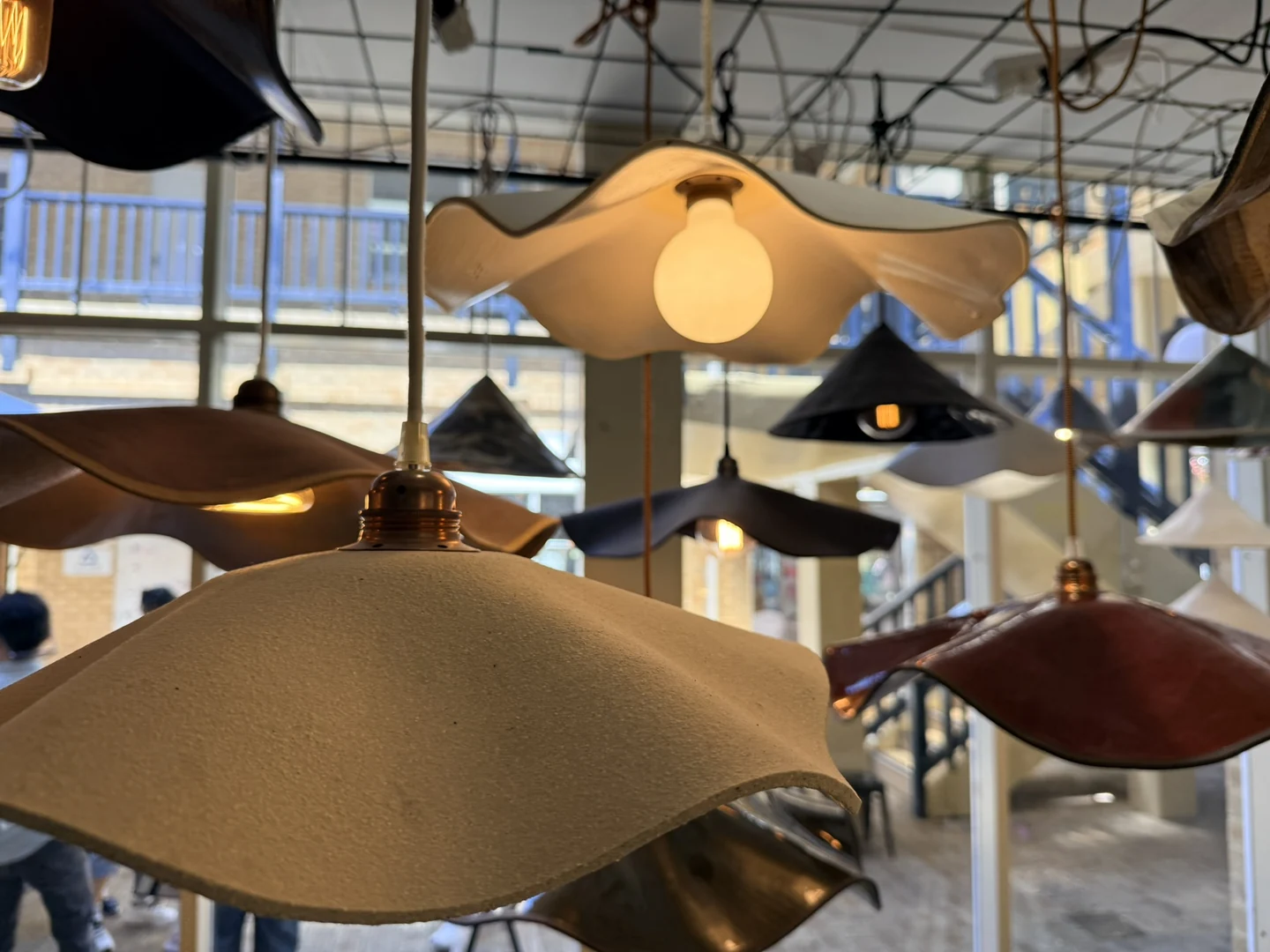
Named after Marilyn Monroe’s dress, their folds suggest movement, although achieving that effect requires a carefully developed process.
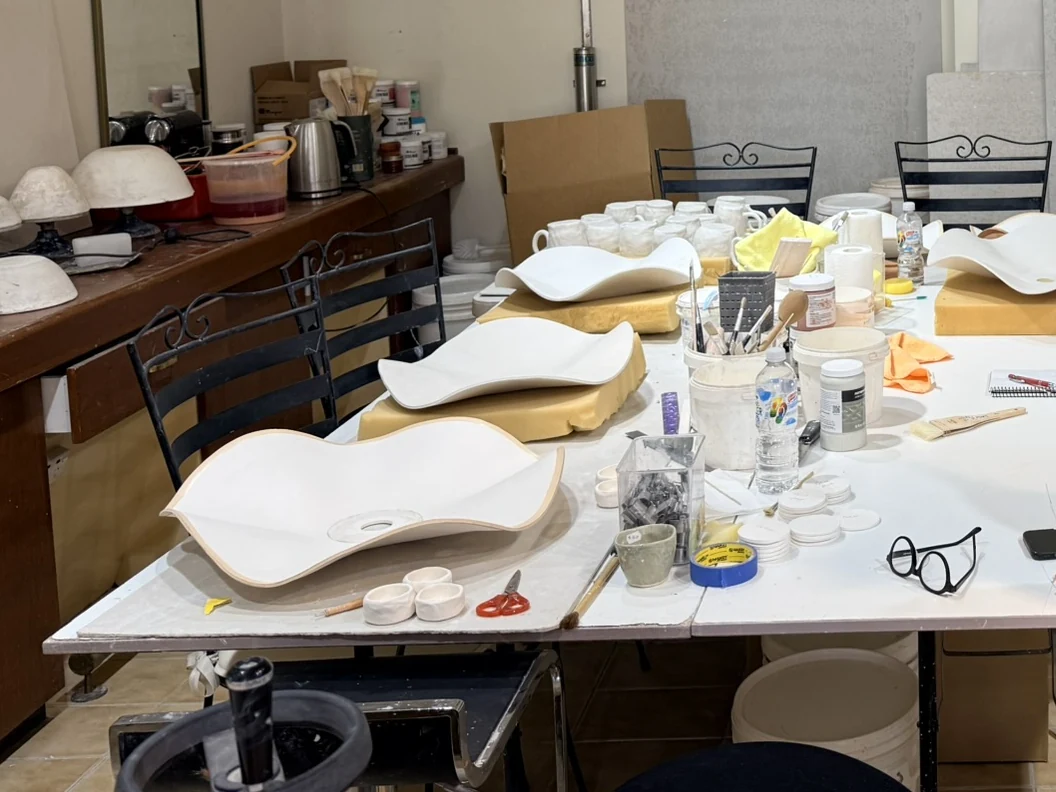
The light begins with a slab of clay worked on while still wet. Gavin uses tools to establish the form, then allows it to dry and harden. At this stage it remains fragile and must be handled carefully.
A first firing turns the clay into ceramic. Glaze is applied before the piece returns to the kiln.
It is during that final firing that the Marilyn finds its finished shape.
Different clays respond differently to heat. Some soften more than others, and the forms shift as they fire. Gavin has learnt how to work with those changes, but opening the kiln still carries uncertainty.
“And you never know how they’re going to turn out until you open the kiln lid.”
The seemingly effortless folds took about a year and a half to achieve. He had to find the right clay and firing technique, and work out how to preserve the intended form.
The ceramic-and-glass wall lights required another lengthy period of experimentation. Glass cracked. Shapes failed. Combinations that seemed promising did not survive the process.
Each adjustment also demanded patience. A change could take weeks to move through production before he knew whether it had worked.
© Shamus Seow
© Shamus Seow
© Shamus Seow
04
The colour worth keeping
One particular glaze tested that patience for about a year.
Gavin points out a deep, mottled red he calls shiraz. The colour emerged from a combination of clay and glaze that, he explains, were not really designed to work together.
He loved the result. Reproducing it reliably was another matter.
Pieces blistered or failed. At one stage, producing a single light suitable for a customer meant making six.
He changed temperature ranges, cleaning methods and cooling schedules, trying to understand what the materials needed.
Eventually, he found a process that worked.
There have been other glazes he has abandoned, along with designs that looked considerably better in his imagination than they did in ceramic. Experience has helped him judge when an idea is close enough to keep pursuing and when it is time to move on.
The shiraz was worth the trouble.
Its colour was something he wanted people to have in their homes, and the work of achieving it gave him a technique he could put his name to.
For Gavin, that is part of the value of making: staying with an uncertain result long enough to understand how to bring it into being.
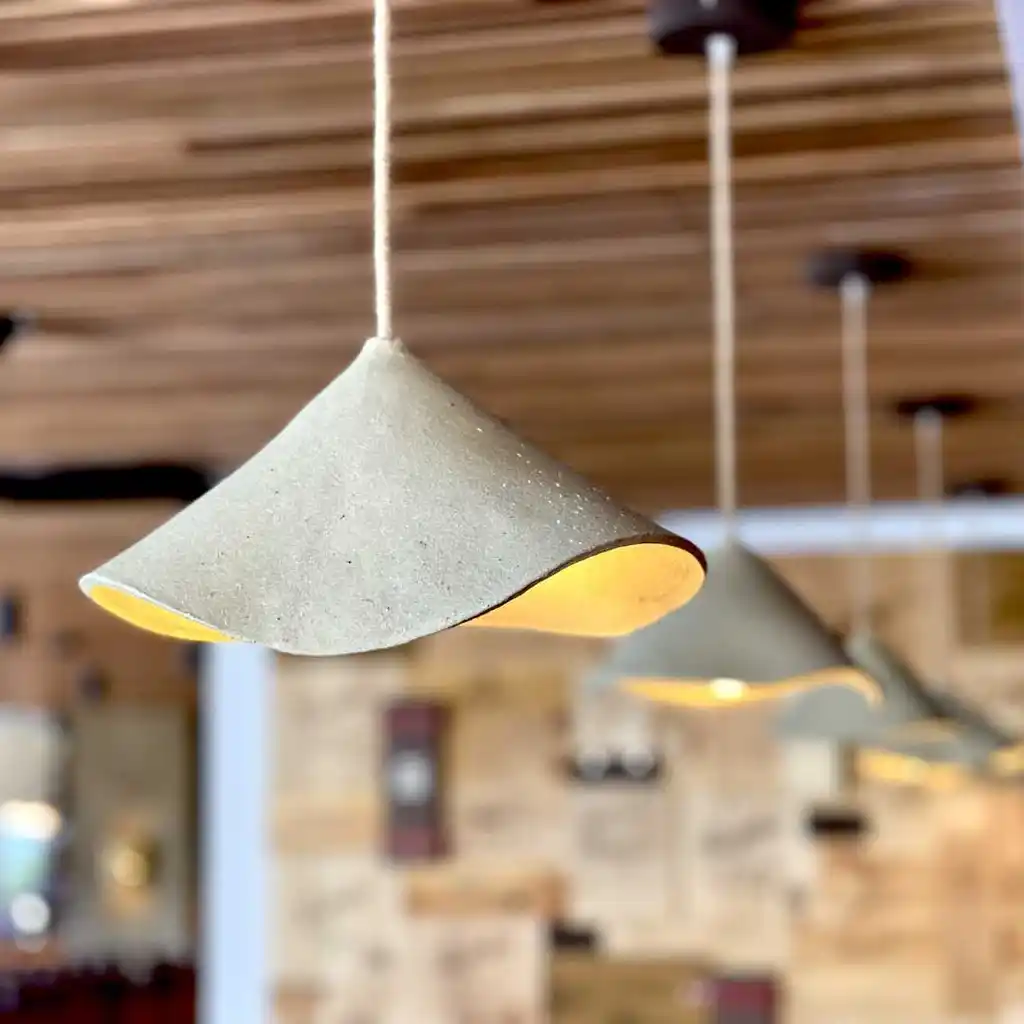
Image supplied by Gavin Carver
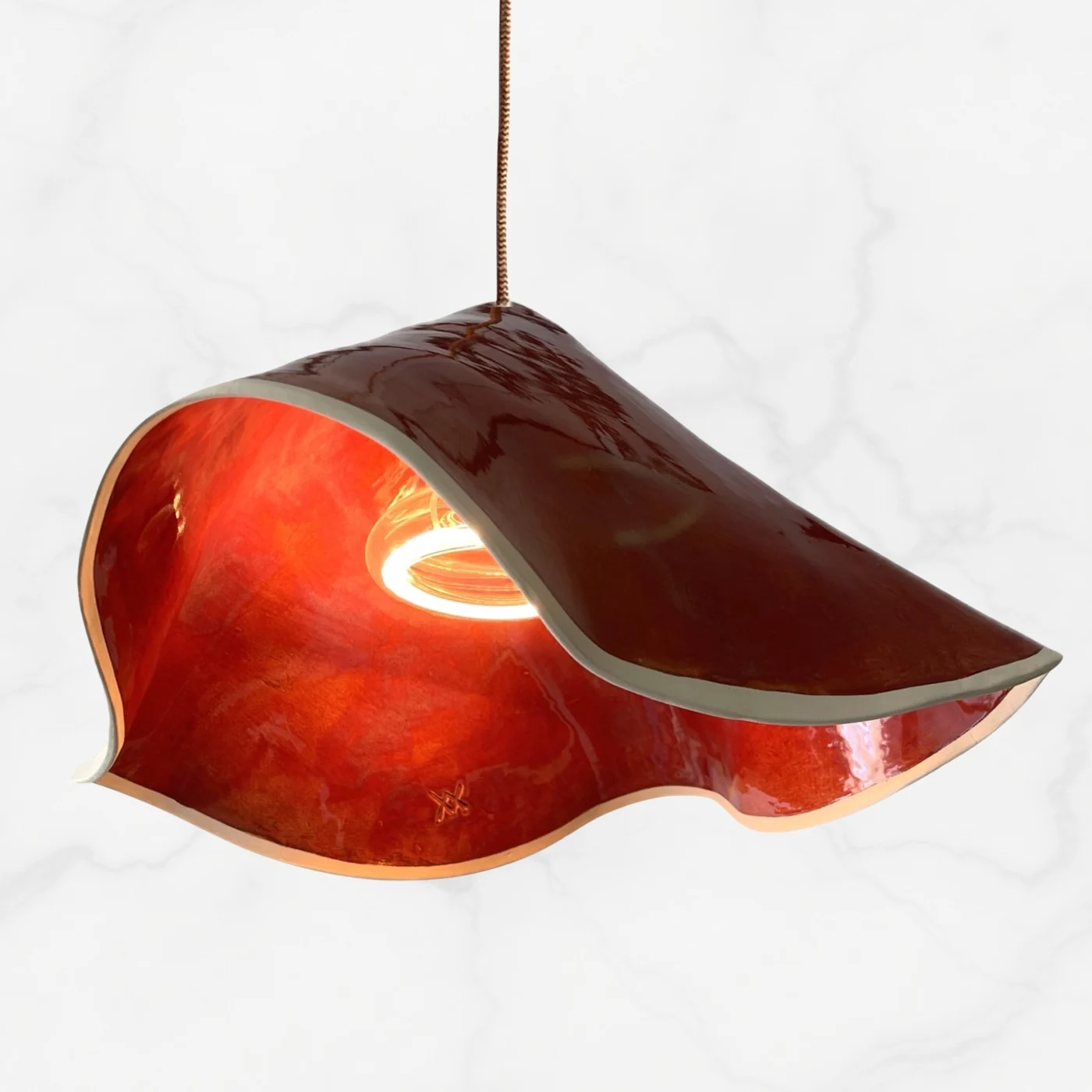
Image supplied by Gavin Carver
© Shamus Seow
05
Making the business work
Leaving advertising did not mean immediately cutting every connection with his former career.
Gavin continued consulting in social media while developing the ceramics business. The income helped support him through the transition, allowing him to use established skills while learning unfamiliar ones.
But he treated the making seriously from an early stage. It was his job, even while he was still building the business around it.
“I don’t have a plan B so I have to make plan A work,” he says.
That work extends well beyond shaping clay.
Some days are devoted to production, others to glazing, packaging or maintaining kilns. His kiln is housed separately from the studio, so unfinished pieces must also be packed into the car and transported between locations.
The business is now growing to a point where he is preparing to hire an assistant and train them in the process. Having handled everything from production to kiln maintenance himself, Gavin is getting ready to share some of that work.
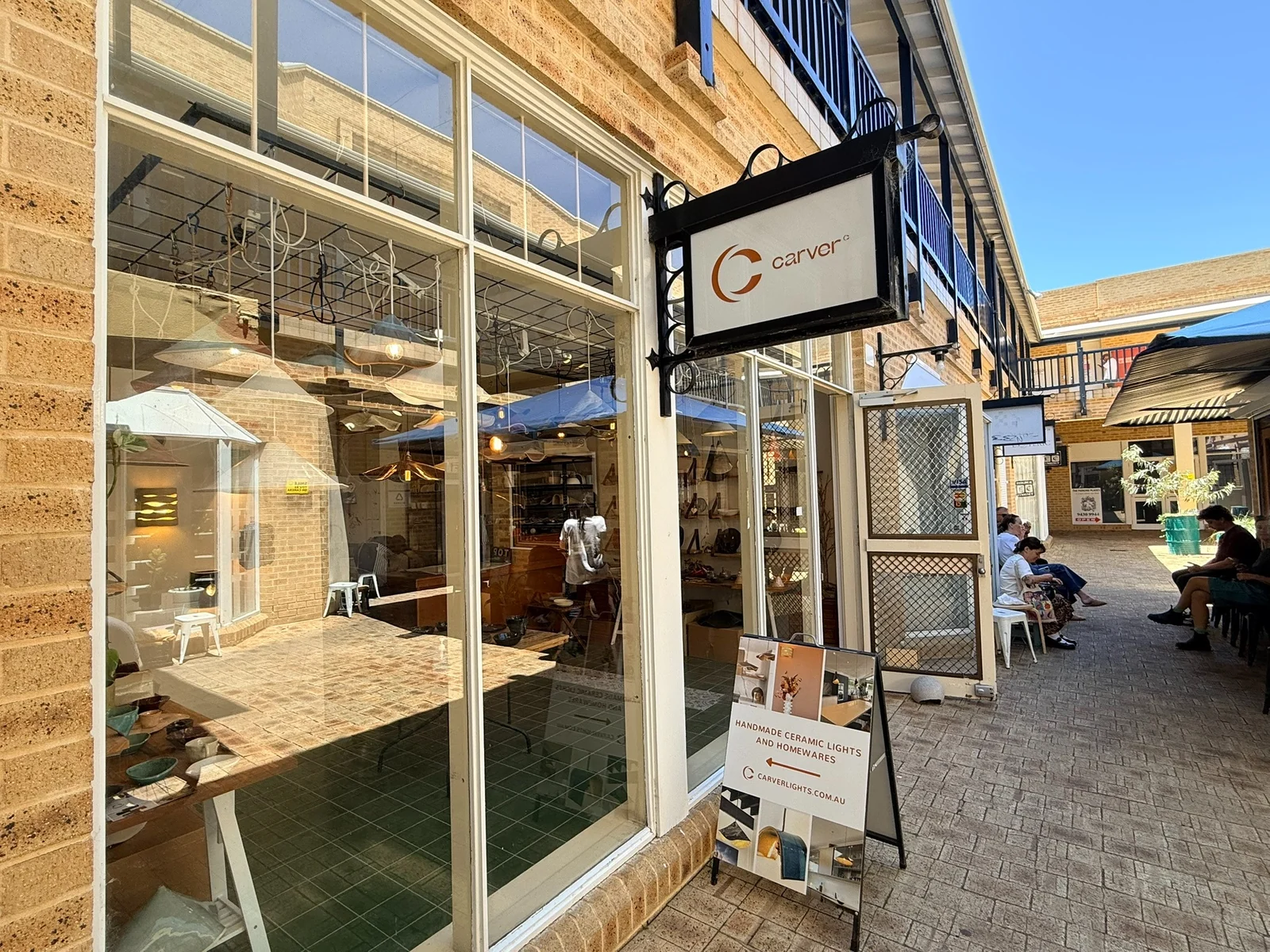
At the time of our interview, Gavin had also signed up with lighting retailer About Space, which has six retail locations across New South Wales, the ACT, Queensland and Victoria. The retailer was preparing to stock his lights—a significant next step for a business built piece by piece.
Reaching more customers also means making sure those carefully crafted pieces survive the journey.
Even the packaging required experimentation. To test whether a large ceramic light could withstand delivery, Gavin packed one into a box and threw it around, refining the packaging until he was confident it would protect what was inside.
© Shamus Seow
© Shamus Seow
06
A room of its own
The work continues after a light leaves Gavin’s hands.
He follows up with customers to find out whether it arrived safely, how installation went and how it sits in the room. After so much time spent shaping, firing and finishing, he wants to know what happens when the piece reaches the space it was made for.
The setting matters. A light’s effect depends partly on the globe inside it, the other sources of illumination nearby and what its owner wants from the room. Some people favour the appearance of a vintage-style globe; others need something brighter.
Gavin supplies a globe with each light, but encourages customers to consider the choice for themselves.
His role is to give that light a form: a ceramic fold that directs it, an opening through which it escapes or a combination of glass and clay that softens its presence.
The pieces have also found their way into local restaurants and bars, where the warmth and atmosphere he describes become part of a shared experience. Brighton Wine Bar in Scarborough has about six of his lights, while his work also features at Anglesea Restaurant in Fremantle’s Garde Hotel.
At home, the decision can be more gradual. Some customers spend a year looking at his lights before returning, finally ready to choose one.
By then, Gavin has spent considerable time making sure the piece is something he is happy to let go.
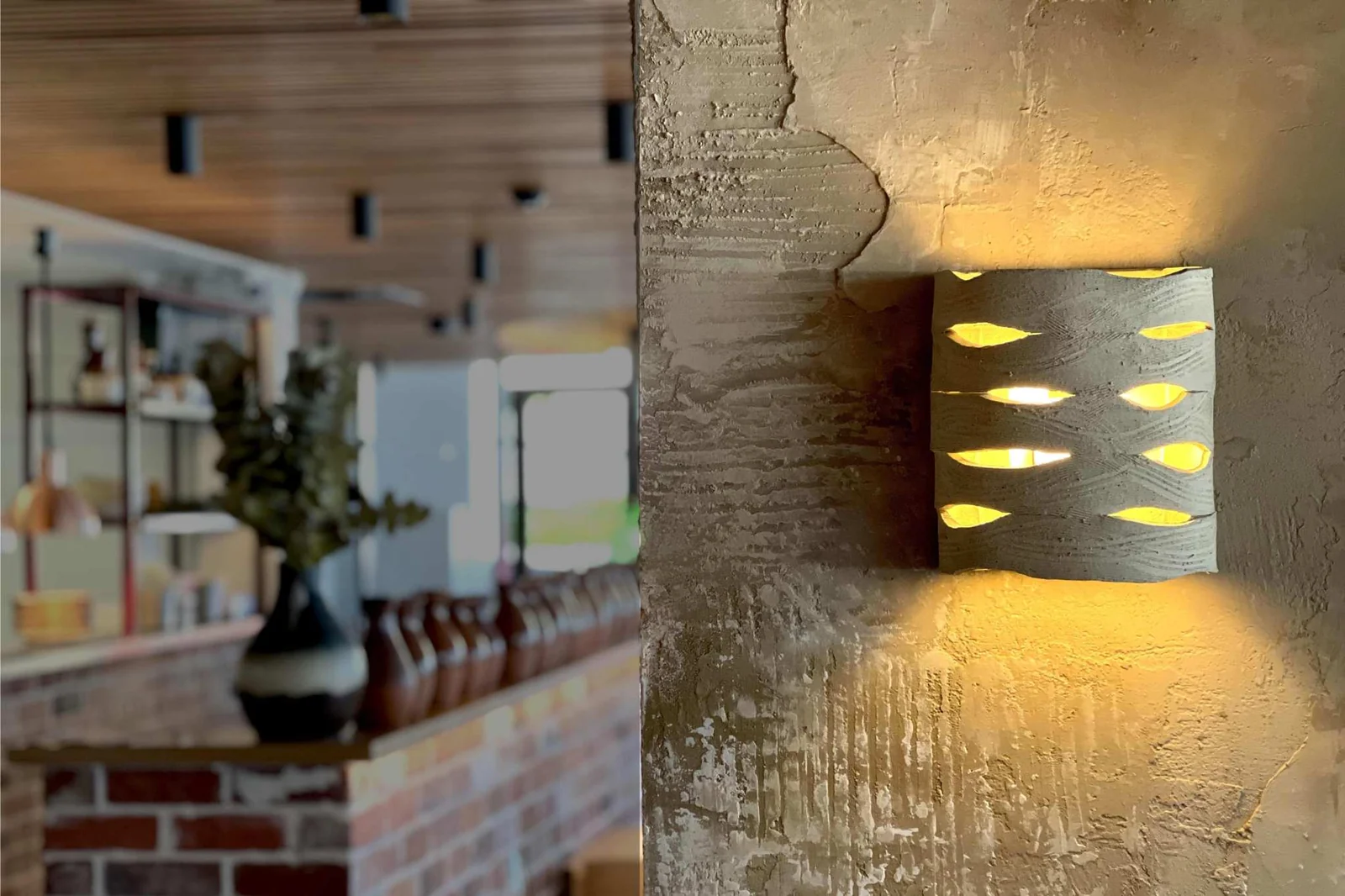
Image supplied by Gavin Carver
© Shamus Seow
07
Worth the uncertainty
Gavin had imagined that leaving advertising might lead to a less stressful working life.
Ceramics has complicated that expectation.
There are still deadlines, production demands and problems whose causes are not immediately apparent. A familiar process can produce an unfamiliar fault. A new design can mean beginning the experiments again.
Yet he has not regretted the change.
The variety matters to him, as does the opportunity to make something that brings people joy.
“I’m lucky enough to make a product that makes people happy.”
It can be easy to lose sight of that amid the demands of making and glazing. When he stops and pays attention to the work itself, he remembers how much he enjoys it.
There are more possibilities ahead: floor lamps, table lamps and combinations of metal, ceramic and glass. Each will bring another set of questions to answer.
For now, there are lights to glaze and another firing to prepare.
Some pieces may yet find their way into his mother’s garden. Others will leave Fremantle for a room somewhere else, carrying the curves Gavin shaped and the colour he kept trying to get right.
Then someone will switch one on, and a room will feel complete.